What It Costs
We don't have a price list to quote you here, and giving you a made-up number would do you no favors - torsion spring jobs vary by door weight, spring size, and whether one spring broke or the cable went with it. What we can tell you is what drives the variation in this area. Most houses here were built between 1976 and 2013, with the bulk of that stock going up in the 1980s and 90s across neighborhoods like Grant Creek, Miller Creek, and the Lower Rattlesnake. That means most doors are standard torsion setups rather than the older side-mounted extension springs you'd find on a pre-1960s house, which keeps parts availability straightforward rather than a hunt for obsolete hardware. The real cost swing comes from timing: a spring that snaps on a double door during a cold snap, when steel is already stressed, tends to take the cable or a roller with it. A single spring failure on an undamaged door is a simpler job than one where the door dropped and bent a track. We'll always look at the door before we talk numbers - not before.
How Local Conditions Play In
Missoula sits in a severe cold climate band, and that matters more for garage door springs than almost any other part of the house. Torsion springs are wound steel under constant tension, and steel loses flex as it gets cold. A spring that's been doing fine for years can reach its breaking point on the coldest morning of the season, not because it's suddenly worn out, but because cold steel is brittle steel - it has less give to absorb the daily stress of winding and unwinding. With 7,500 households in the service area and roughly 3,810 of them owner-occupied houses, a lot of garages here sit unheated or barely heated, which means the door and opener hardware sit right at outside temperature for months at a time. Houses built in the 1980s and 90s boom years, which make up most of the stock across areas like Orchard Homes, Westside, and the University District, were built to the codes and spring tension standards of that era - fine for the loads at the time, but not something you want to assume is still at full strength thirty-plus years and a lot of winters later.
The Problem
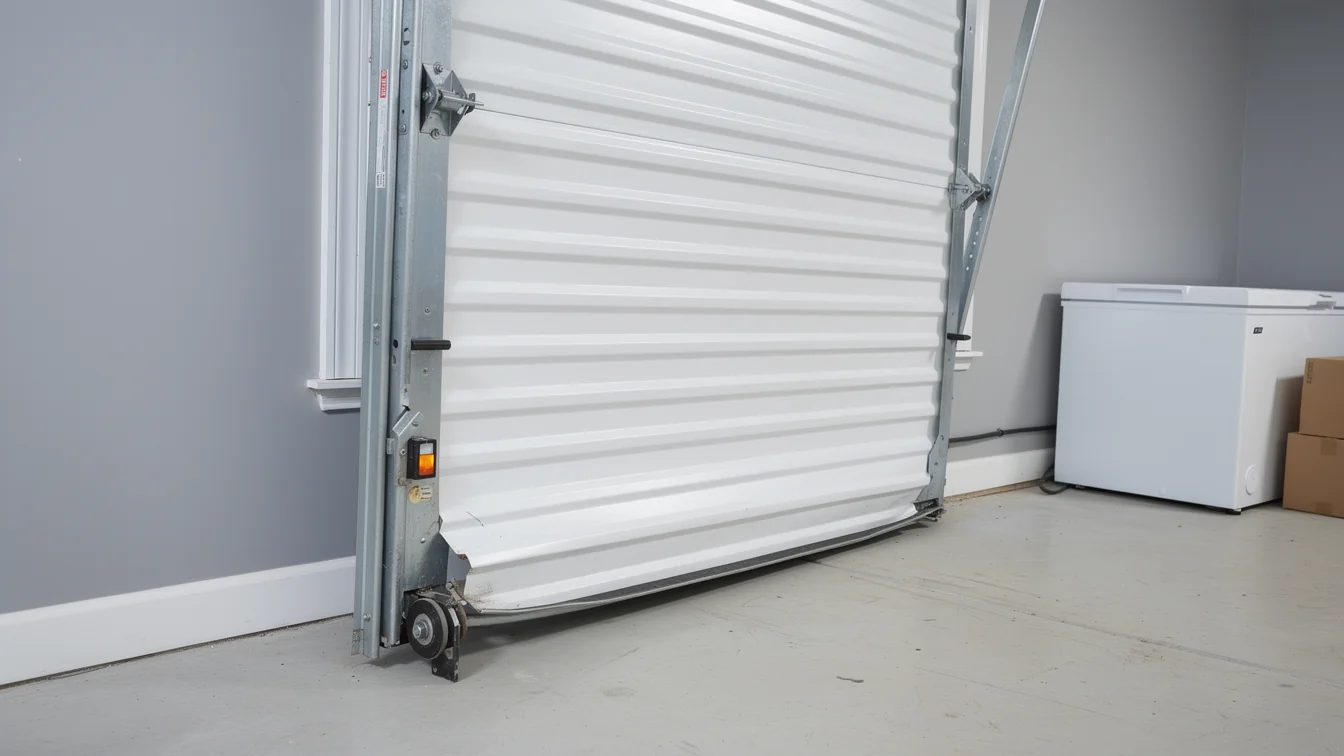
A torsion spring doesn't usually give you warning. It winds and unwinds thousands of times over its life, and cold weather adds stress to every one of those cycles without you seeing it happen. What you do see is the result: the door won't lift, or it lifts a few inches and stops, or - if you're unlucky - it drops hard because the opener tried to force a door with no spring tension left in it. On a double-car door, which is heavier and under more total tension than a single, that drop can also pull a cable loose or bend a track bracket, turning a spring job into a bigger repair. We see this pattern more in the depth of winter than at any other time of year, which tracks with the cold-weather embrittlement, not with age or neglect. It's a mechanical limit being reached, not a sign you did anything wrong.
Doing Nothing For Now
If a spring breaks and the door is stuck shut, there's not much to decide - you need it open. But if it's still moving, just slower or heavier than normal, it's tempting to leave it until spring (the season, not the part) when it's warmer and less urgent. We'd push back on that. A door running on a weakened or partially broken spring puts more load on the opener motor and the other spring, and in cold weather that second spring is under the same stress the first one was before it failed. We won't tell you every slow door is an emergency - plenty aren't - but a door that's audibly straining or dropping unevenly on one side is one we'd rather look at now than get a call about at 10 below.
Talk to a local pro
Garage door trouble in Missoula?
Same-day service with honest, upfront quotes.