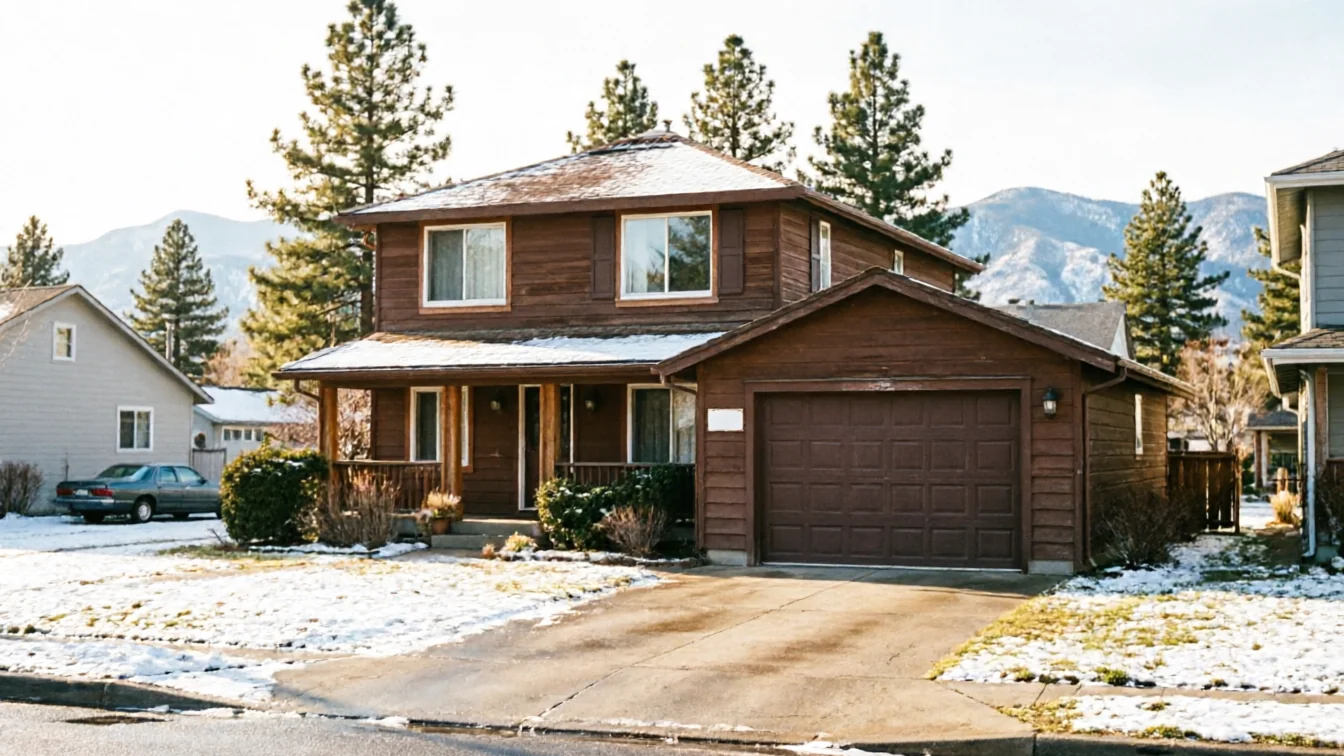
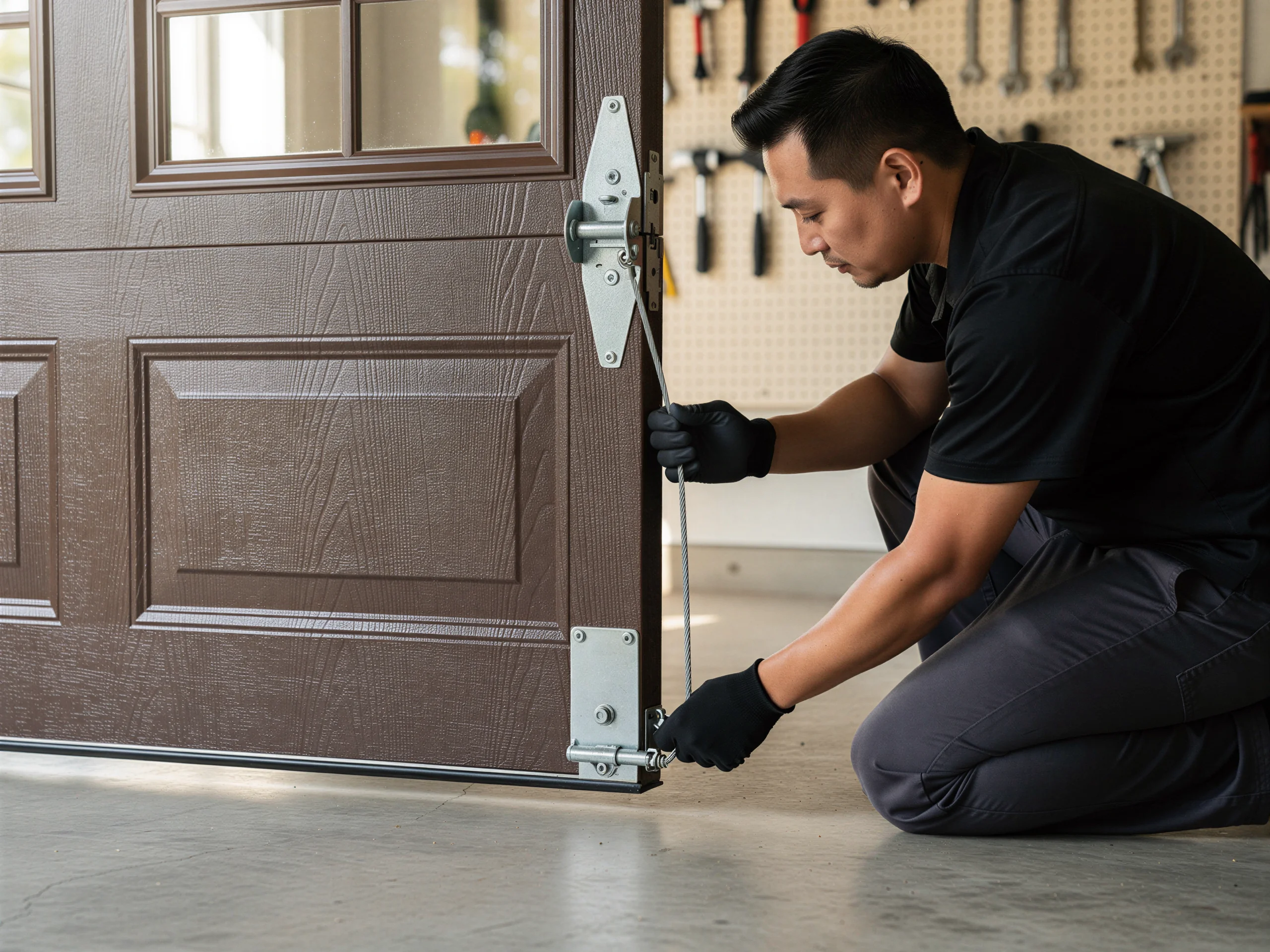
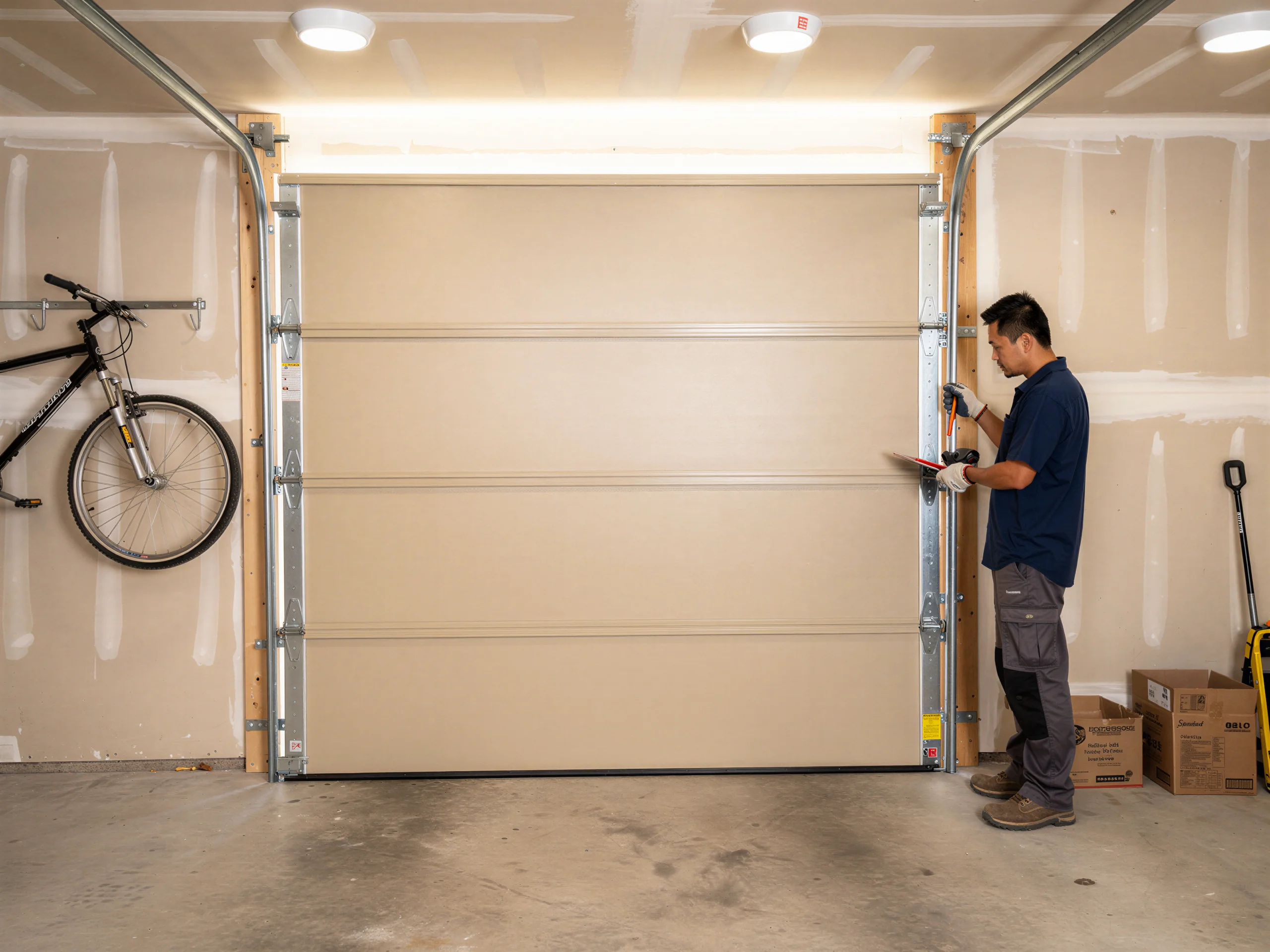
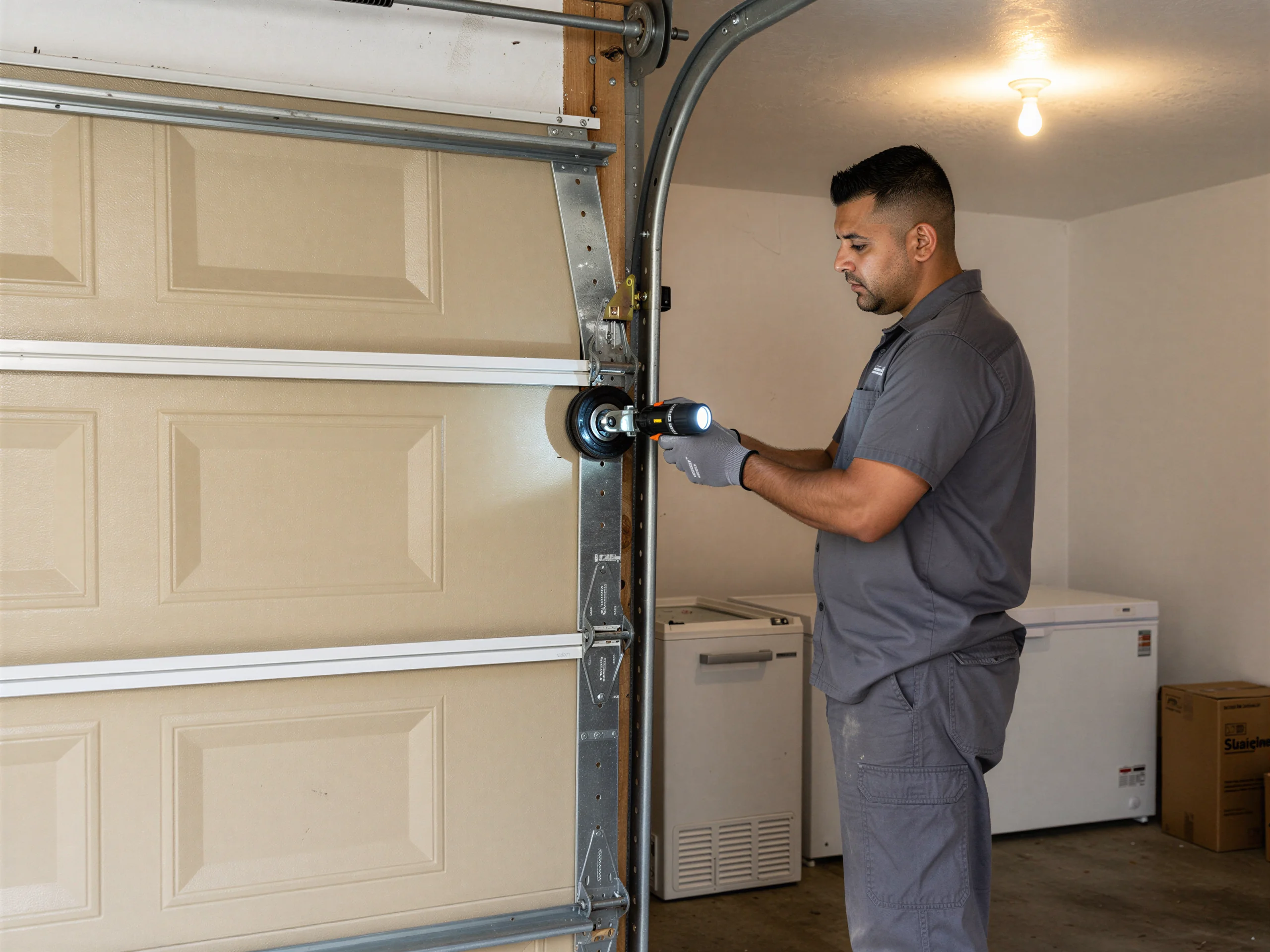
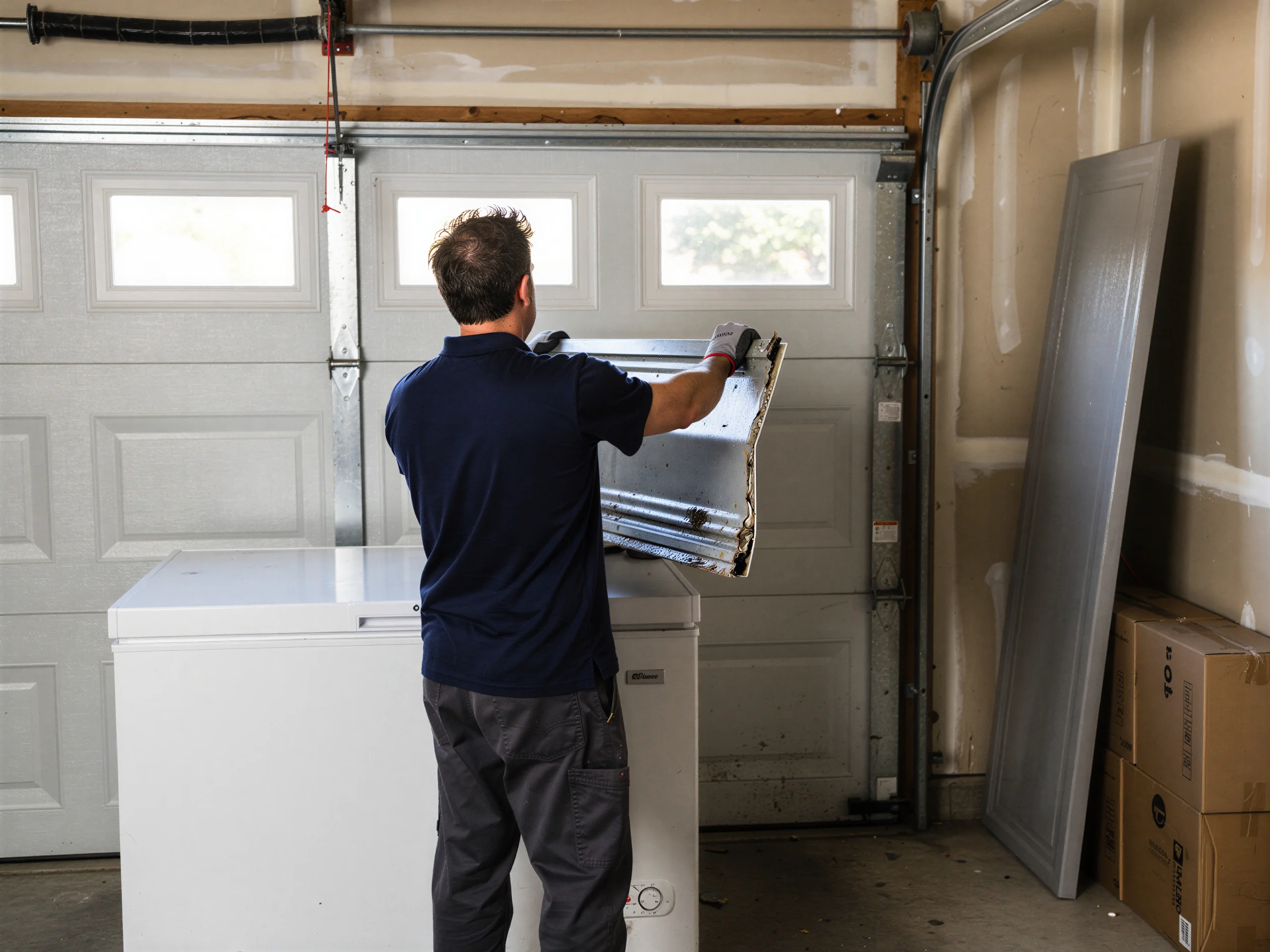
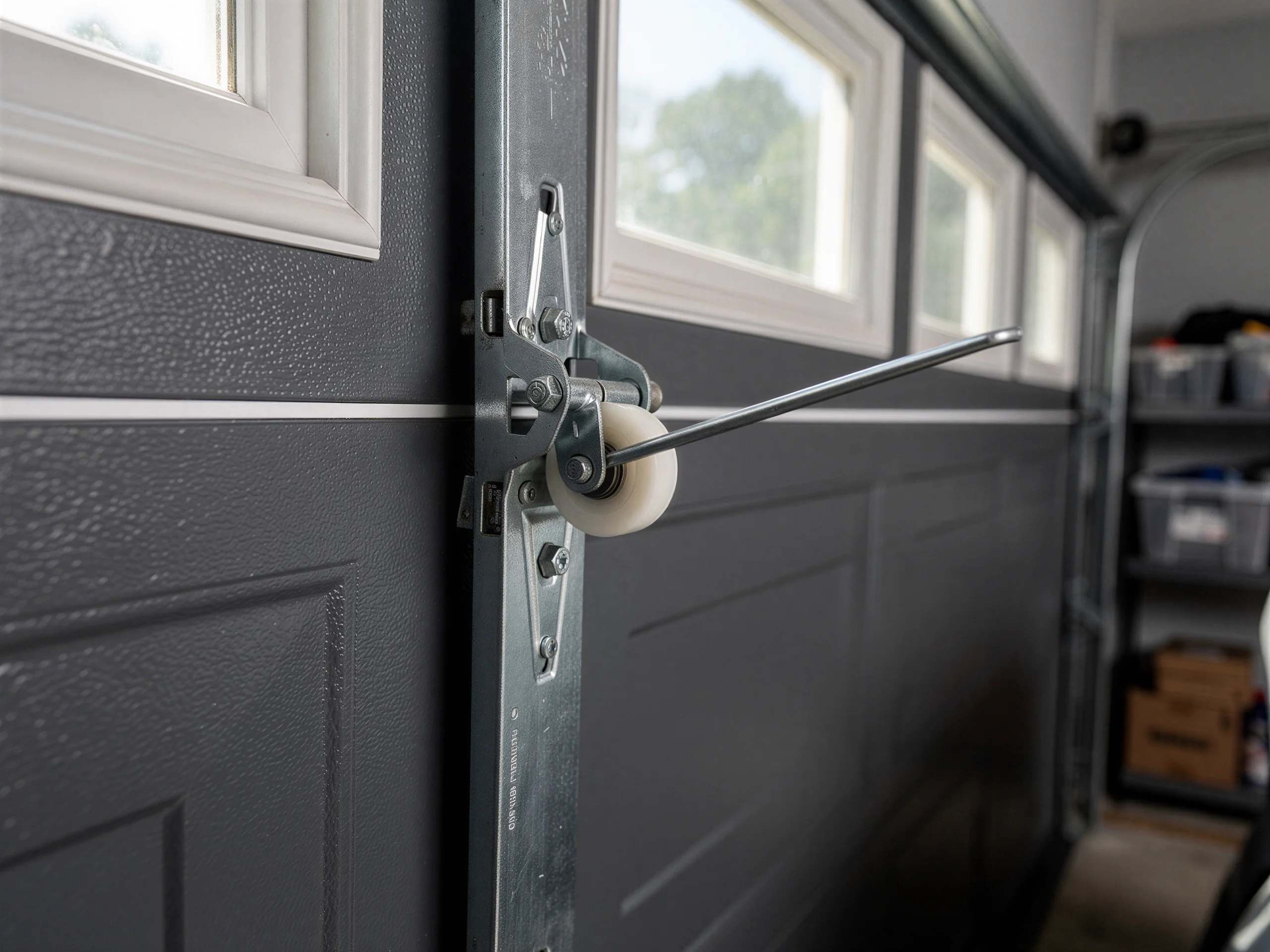
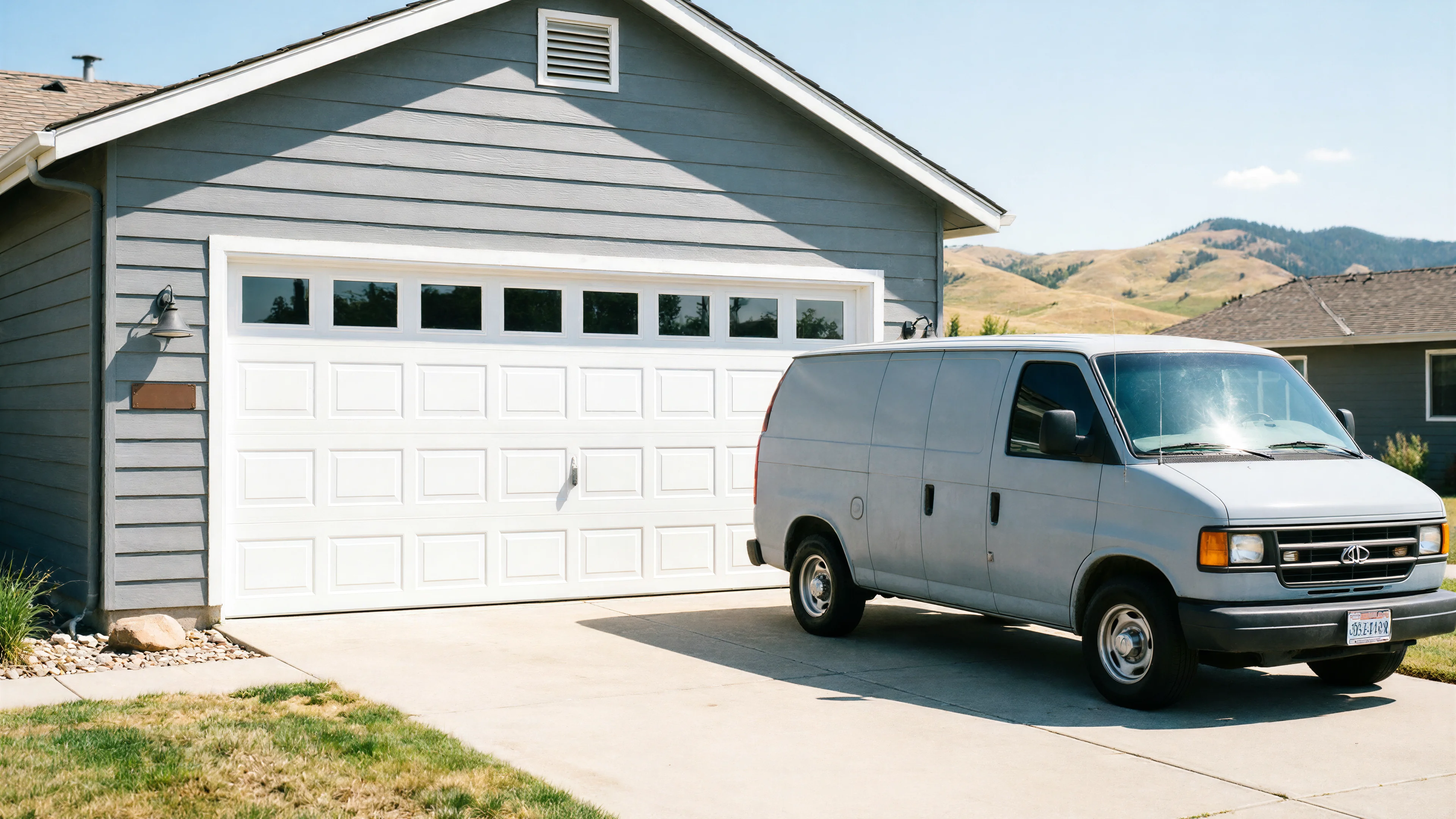
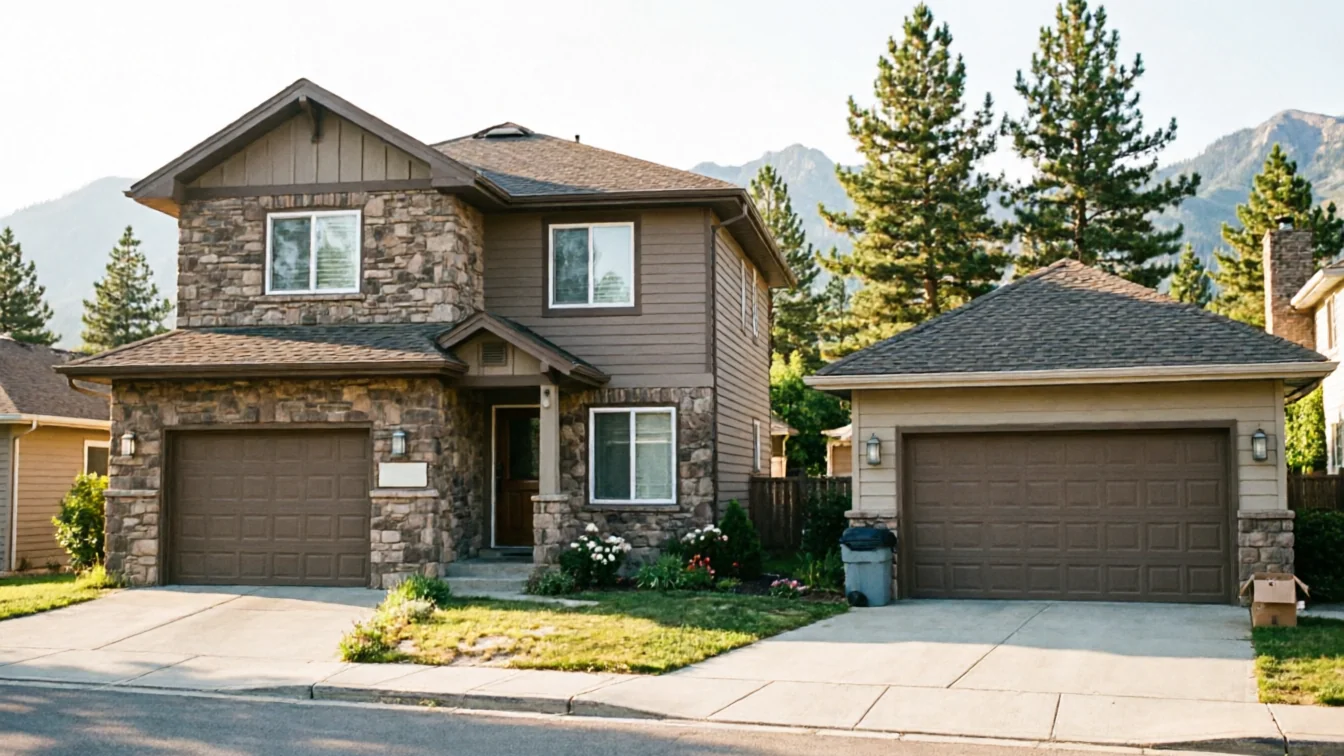
A door installed around 1989 is a different repair than a door installed in 2005. The steel is usually heavier gauge but the insulation, if there's any at all, is thin or foam-board rather than the sandwiched polyurethane panels that came later. In a cold-climate area like this, that thin insulation means more condensation on the inside of the panel and more strain on an opener trying to move a door that's picked up some moisture weight in winter.
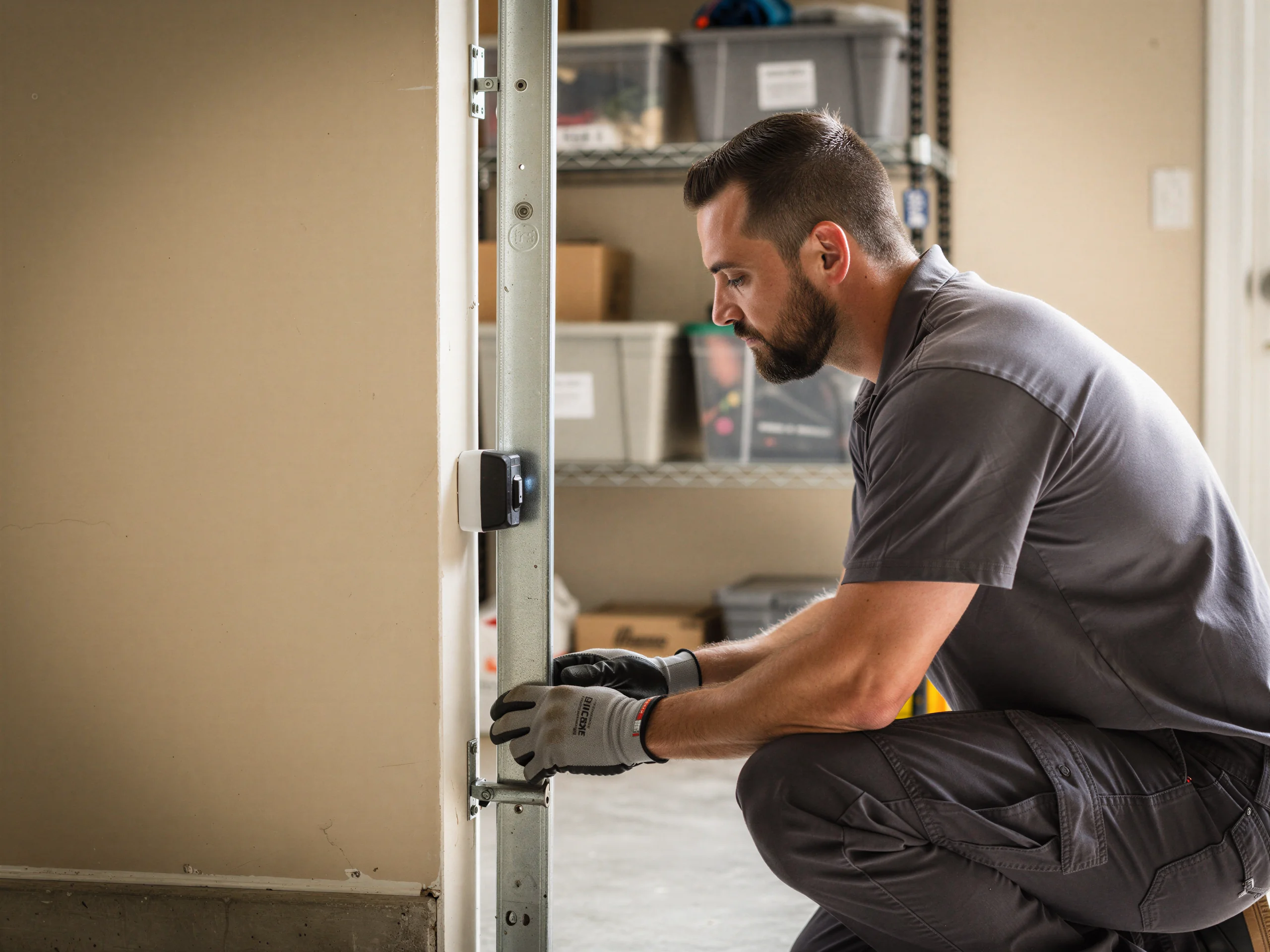
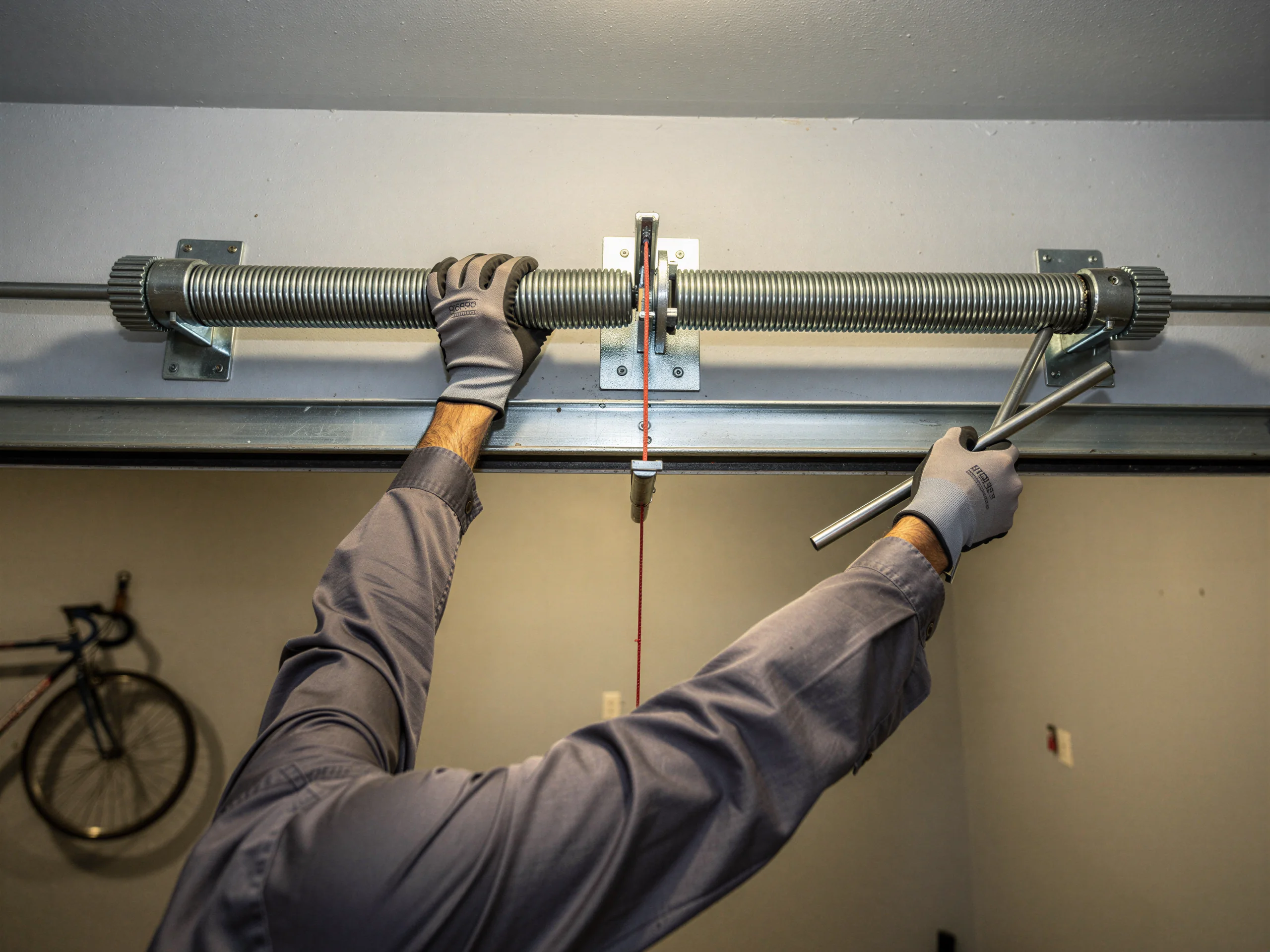
The openers from that period are chain-drive units with early safety-sensor retrofits bolted on, sometimes awkwardly, after the federal sensor mandate went into effect. We find these sensors misaligned or wired in as an afterthought more often than not. The springs are standard torsion, but on a 30-plus-year-old door they've usually never been replaced, which means they're near or past their cycle life regardless of how the door looks.
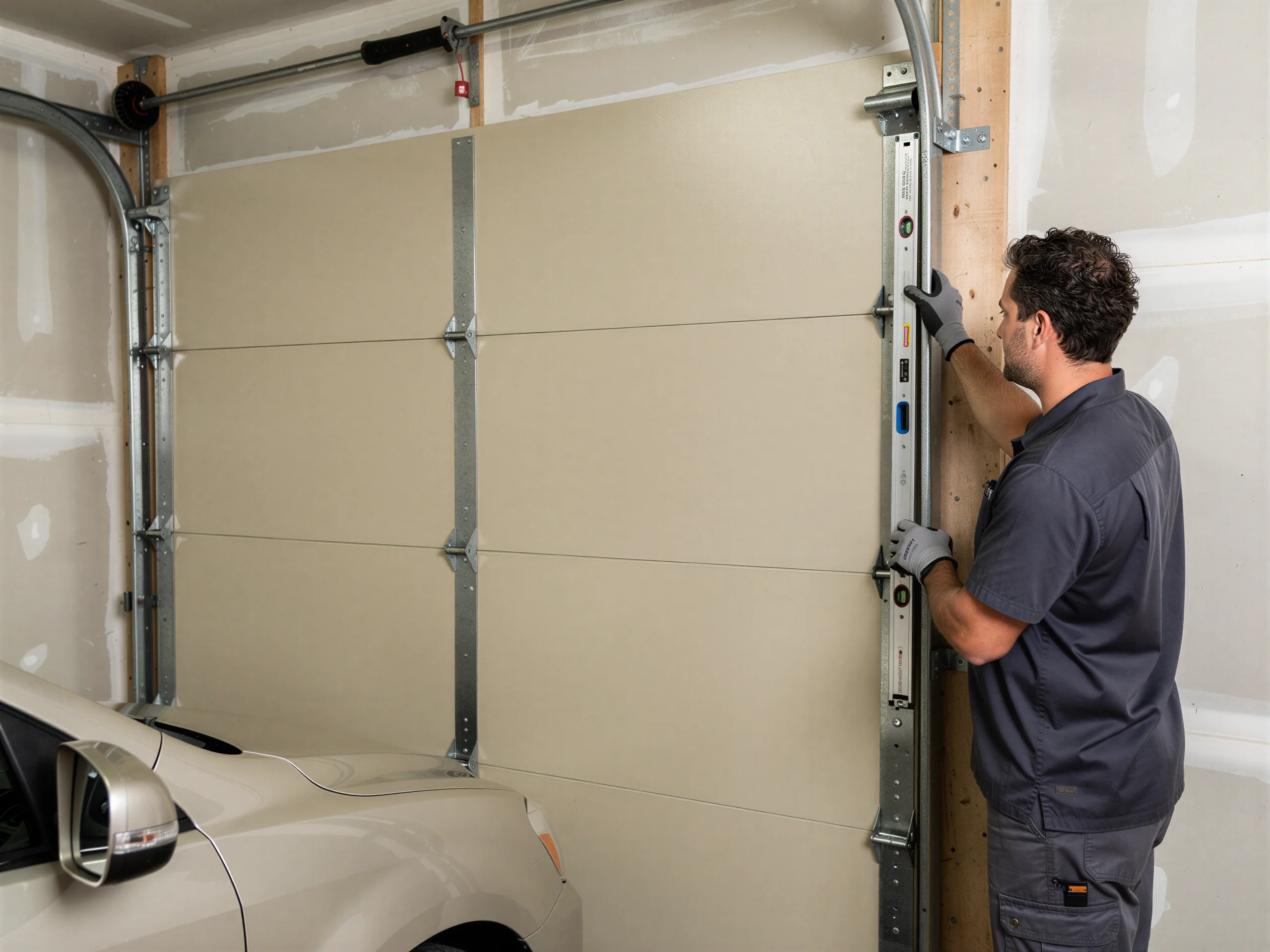
We won't try to sell a full replacement on a door that just needs a spring and a sensor realignment. If the panels and track are sound, a repair is usually the right call here - replacement only makes sense once the frame or track has gone out of square, which we do see on some of the older stock in this area.